

The shift from traditional classrooms to digital spaces has been driven by advances in connectivity, software, and pedagogical theory. In the midst of this evolution, the concept of the video future has emerged as a central pillar of online education. Video-based learning is no longer a supplementary tool; it has become the medium through which concepts are introduced, explored, and mastered. By embedding motion, sound, and interactivity into instruction, educators can mirror the richness of face‑to‑face interactions while reaching learners across borders. Understanding how the video future supports knowledge building is essential for anyone involved in curriculum design, instructional technology, or educational policy.
Why the video future matters for knowledge building
Research consistently shows that multimodal presentations—combining visual and auditory cues—enhance comprehension and retention. In the video future, learners can pause, rewind, and replay content, allowing them to process information at their own pace. This self‑paced learning aligns with cognitive load theory, which recommends reducing extraneous load to free up working memory for schema construction. Moreover, videos can demonstrate phenomena that are impossible to replicate in a physical classroom, such as complex molecular interactions or historical reenactments, thereby creating vivid mental models that support deep learning.
Key technological trends shaping the video future
Several innovations are converging to make video-based instruction more powerful and accessible:
- High‑definition streaming ensures crisp visuals and reliable playback even on low‑bandwidth devices.
- Adaptive bitrate algorithms automatically adjust quality, preventing buffering and maintaining engagement.
- Artificial intelligence–driven transcription provides captions and searchable transcripts, supporting learners with diverse needs.
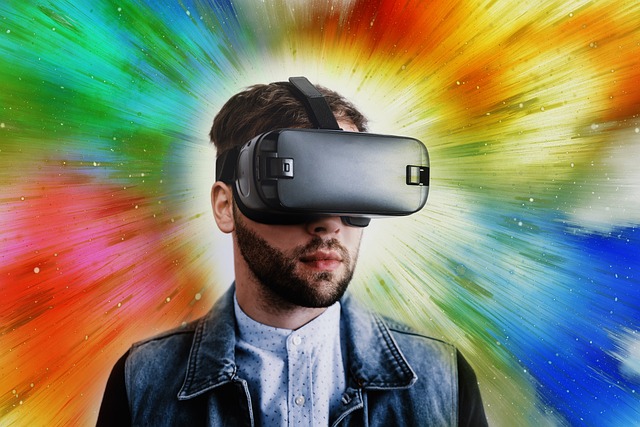
- 360‑degree and VR video immerse students in simulated environments, fostering experiential learning.
Interactive elements that enrich the video future
Static video can be elevated into a dynamic learning experience by integrating embedded quizzes, branching scenarios, and annotation tools. These interactivities transform passive viewing into active inquiry, prompting learners to apply concepts in real time. For example, a chemistry video might pause to ask students to predict the outcome of a reaction before revealing the answer. Such prompts encourage higher‑order thinking and provide immediate feedback, which is critical for knowledge consolidation.
Personalization through data analytics
Every click, pause, and replay generates data that can be analyzed to understand individual learning patterns. Educational platforms leverage this information to recommend tailored content, adaptive pathways, and targeted remediation. In the video future, personalization means that a student struggling with algebraic proofs can receive a curated set of videos focusing on foundational concepts, while an advanced learner might be guided toward complex problem‑solving challenges.
Collaborative learning in a video‑centric environment
Videos serve as a shared reference point for discussion, enabling synchronous and asynchronous collaboration. In forums, students can annotate sections of a video with comments, questions, or additional resources. Group projects may involve creating response videos, allowing learners to demonstrate understanding through production skills. Such collaboration not only reinforces content knowledge but also develops communication, critical analysis, and digital literacy—skills increasingly demanded in the modern workforce.
Assessment innovations driven by the video future
Traditional exams are being complemented—or even replaced—by assessment models that capture process, not just product. Video‑based reflective portfolios, real‑time demonstrations, and interactive simulations can be scored using rubrics that account for reasoning, problem‑solving steps, and evidence of mastery. Automated grading systems can analyze transcripts and interaction logs to provide formative feedback, freeing educators to focus on higher‑level facilitation.
Challenges and pathways to overcome them
Despite its promise, the video future faces obstacles such as unequal access to bandwidth, varying levels of digital literacy, and the risk of superficial engagement. Addressing these challenges requires a multifaceted approach:
- Infrastructure investment—public and private partnerships can expand broadband coverage in underserved areas.
- Professional development—teachers need training in content creation, pedagogical design for video, and data‑driven instruction.
- Design standards—establishing guidelines for accessibility, such as captioning and screen‑reader compatibility, ensures inclusivity.
- Community building—creating spaces for educators to share best practices accelerates innovation and adaptation.
Looking ahead: the evolving video future in education
The trajectory of the video future points toward greater interconnectivity between multimedia, analytics, and adaptive learning systems. Emerging technologies like holographic displays, brain‑computer interfaces, and sophisticated generative models could further blur the line between virtual and real learning environments. However, the core principle remains unchanged: video, when thoughtfully integrated, amplifies human curiosity, facilitates complex reasoning, and democratizes access to knowledge. By aligning curriculum, technology, and pedagogy, educators can harness the full potential of the video future to build resilient, lifelong learners.