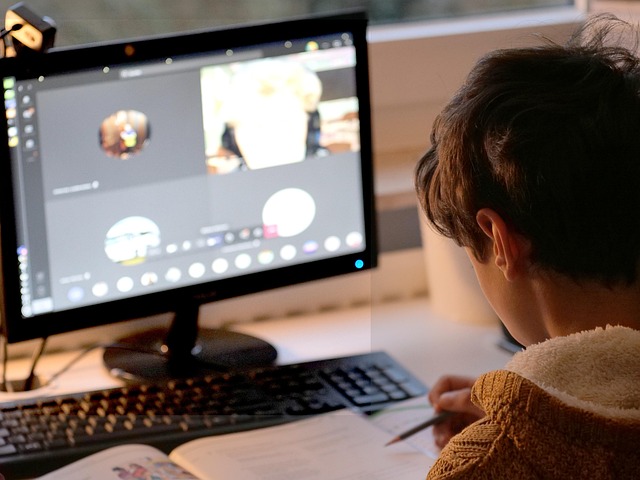


In the past decade, online learning platforms have grown from experimental prototypes into essential components of modern education. Yet the core of effective learning remains a dialogue between teacher and learner. Video answers—short, focused responses to student questions—have emerged as a pivotal bridge that brings that dialogue back into the digital classroom. By combining visual clarity with verbal nuance, video answers enable instructors to convey concepts in ways that written text alone cannot, fostering deeper understanding and encouraging active knowledge building.
Why Video Answers Matter in a Remote Classroom
Remote instruction often suffers from reduced social presence; learners may feel disconnected from the instructor’s intent and tone. Video answers mitigate this gap by offering a personal touch: a human face, gestures, and expressive facial cues that signal empathy and confidence. When a student asks whether a particular algebraic manipulation makes sense, seeing the teacher walk through the steps while highlighting each move helps the learner see not just the “what” but the “why.” This aligns with research that shows multimodal instruction improves retention, especially for complex or abstract material.
- Instant clarification reduces misconceptions that could snowball into larger gaps.
- Visual demonstrations aid in the comprehension of spatial or procedural concepts.
- Personalized feedback fosters a sense of community and belonging.
From Passive Reading to Active Engagement
Traditional answer keys or discussion forums provide static text that students may skim or ignore. In contrast, video answers create an interactive experience. A student can pause, rewind, or rewatch a segment that triggers a question, and then apply the clarified concept immediately in a practice problem. This loop—observe, reflect, apply—encourages a deeper cognitive engagement that is less likely to result in superficial memorization.
“When I first encountered video answers, my motivation shifted from merely checking off assignments to genuinely exploring how each step unfolded,” says a university sophomore studying physics.
Scalability Meets Personalization
One of the most compelling benefits of video answers is their dual capacity for mass reach and individualized support. A single instructor can record a concise explanation for a common question that hundreds of students can access asynchronously. At the same time, the instructor can tailor a follow‑up video to address a specific student’s follow‑up query, ensuring that no learner is left behind. This scalability does not sacrifice quality; it merely amplifies the instructor’s reach without diluting the depth of the interaction.
- Record a baseline video answering the most frequently asked question.
- Upload it to the course platform and tag it for easy discovery.
- When a student comments with a follow‑up question, create a supplemental video to address that nuance.
Enhancing Cognitive Load Management
Complex topics can overwhelm learners if presented all at once. Video answers allow instructors to break down dense material into manageable chunks. By focusing each clip on a single concept, students can process information incrementally. This strategy aligns with the cognitive load theory, which posits that learning is most efficient when extraneous load is minimized and intrinsic load is appropriately scaffolded.
In practice, a biology instructor might produce a short video on the structure of DNA, followed by another on replication mechanisms. Students can then combine these pieces, creating a comprehensive understanding without feeling overloaded.
Fostering Critical Thinking and Knowledge Construction
Video answers are not merely repositories of facts; they can be designed to stimulate inquiry. By posing rhetorical questions, encouraging hypothesis testing, and inviting learners to reflect on how a concept fits into a larger framework, instructors transform passive reception into active knowledge construction. Students are prompted to evaluate the evidence presented, identify gaps, and articulate their own reasoning—skills that are essential for lifelong learning.
Integrating Peer‑Generated Video Answers
Beyond instructor‑led content, video answers can empower students to become educators. Peer‑generated videos encourage learners to articulate concepts clearly, reinforcing their own mastery while contributing to the class’s knowledge base. This reciprocal model not only deepens individual understanding but also creates a collaborative learning ecosystem where knowledge is co‑created rather than simply consumed.
Accessibility and Inclusive Learning
For students with diverse learning needs, video answers offer adjustable modalities. Subtitles accommodate those with hearing impairments, while adjustable playback speeds help learners who need more time to absorb information. Additionally, the visual representation of equations, graphs, or code can be essential for learners with reading difficulties, making complex content more approachable.
Ensuring Quality and Consistency
To maximize the educational impact of video answers, instructors should adhere to best practices: keep videos concise (ideally under five minutes), focus on a single learning objective, and use clear, jargon‑free language. Consistent visual cues—such as a fixed camera angle or a distinct background—help learners quickly orient themselves, while a predictable structure (introduction, explanation, summary) aids memory consolidation.
Measuring Impact: Evidence from Recent Studies
Empirical research supports the effectiveness of video answers. One randomized controlled trial in an introductory calculus course found that students who accessed instructor video answers scored 12% higher on concept‑based exams than those who only used written answers. Another study in a global online literature program reported increased engagement metrics—such as video watch time and discussion posts—correlated with the introduction of short video responses.
These findings suggest that video answers not only improve academic performance but also enhance learner satisfaction and persistence.
Future Directions and Technological Enhancements
As artificial intelligence and adaptive learning platforms evolve, the potential for video answers expands further. AI can auto‑generate captions, translate subtitles into multiple languages, or even detect comprehension gaps and prompt the instructor to provide targeted follow‑ups. Interactive overlays—such as clickable annotations or embedded quizzes—can transform static video into a dynamic learning module.
Conclusion: Video Answers as a Catalyst for Knowledge Building
Video answers embody the convergence of accessibility, personalization, and scalability in online education. By offering clear, engaging explanations that students can revisit on demand, they transform the way knowledge is transmitted, processed, and internalized. As educators continue to explore innovative ways to integrate video answers into curricula, the result will be a more responsive, inclusive, and intellectually vibrant learning environment—one where every learner has the opportunity to turn curiosity into mastery.